August 2026
August 2026
Ryan Family Research Acceleration Fund Advances Promising Biomedical Discoveries
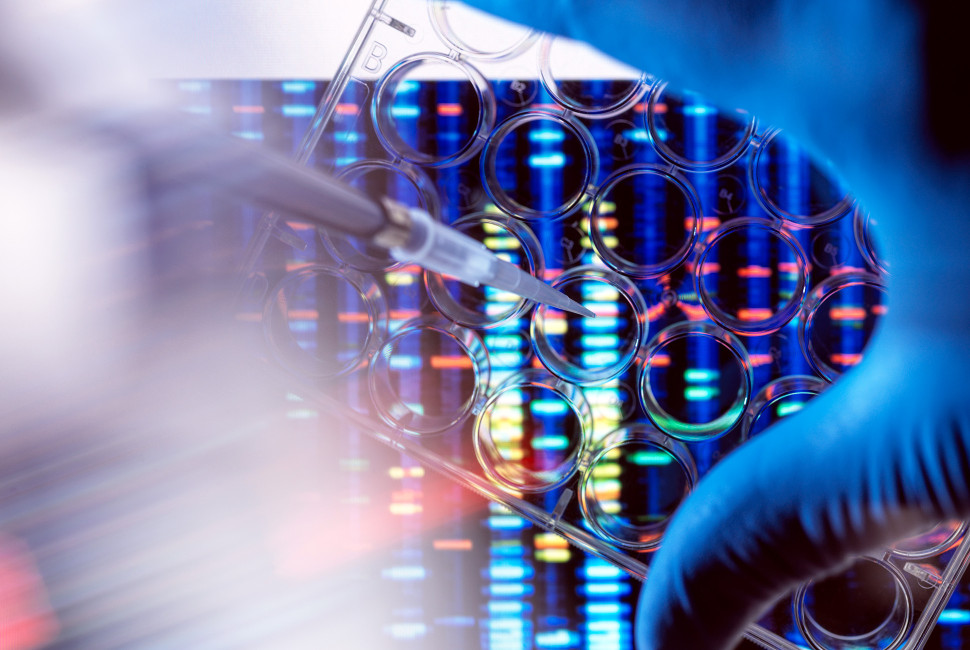
Northwestern University recently awarded more than $2.1 million through the Pat & Shirley Ryan Family Research Acceleration Fund to advance eight biomedical research projects with strong translational potential.
This fifth round brings the fund's total support to more than $10.9 million across 41 project awards. Made possible by the Patrick G. '59, '09 H and Shirley W. Ryan '61, '19 H ('97, '00 P) Family's $35 million commitment, the initiative provides strategic support between academic discovery and real-world application, when promising ideas often require additional validation and development.
Selected from 27 proposals, the projects span therapeutics, devices and diagnostics, and health IT and data sciences. They address challenges including cancer, neurodegenerative disease, maternal-fetal health, mental health, Duchenne muscular dystrophy and precision neuromodulation. Funding will help teams reach milestones needed to attract additional support and partners. Learn more.
In this issue
Research News Across Campus
- Five young researchers receive NSF CAREER Awards
- Northwestern joins expanded Midwest Quantum Collaboratory
Research Breakthroughs
Translation, Policy and Talent
- N.XT Fund invests in three Northwestern startups
- A new era for early childhood in Illinois
- AI4Energy IIN/Trienens Fellows program launches
Important Policy and Guidance Updates
- Federal government expands high-risk entity lists
- Mid-year disclosure reminder
- Stay informed about federal policy updates
Research Activities Across Campus
Five Young Researchers Receive NSF CAREER Awards
Five Northwestern assistant professors—Kaize Ding, Duri Long, Feng Ruan, Lisa Volpatti and Jakub Witaszek—have received Faculty Early Career Development Awards from the National Science Foundation, the foundation's most prestigious honor for junior faculty. The awards support ambitious research and education spanning reliable AI, human-centered computing, mathematical sciences and biomedical materials. Meet the award recipients.
Northwestern Joins Expanded Midwest Quantum Collaboratory
Northwestern is one of five new members of the Midwest Quantum Collaboratory, expanding the regional alliance to eight research universities. Coordinated through the Institute for Quantum Information Research and Engineering (INQUIRE), Northwestern's participation will connect University expertise in quantum materials, sensing, communications and computing with complementary strengths across the Midwest.
The partnership will create opportunities to share infrastructure, pursue coordinated initiatives, develop quantum talent and strengthen ties with industry, government, Argonne and Fermilab. INQUIRE Director Michael R. Wasielewski notes that Northwestern's strengths span new quantum materials, scalable quantum communications and networks, and quantum computing and algorithms, work advanced by bringing science, companies and the broader community together. Explore Northwestern quantum research.
First AI-Driven Telescope Goes Stargazing
A deep-learning system developed through the NSF-Simons AI Institute for the Sky successfully scheduled observations on the Dark Energy Camera at the Victor M. Blanco Telescope in Chile. Trained on 13 years of historical data, the system completed two observing runs and could eventually help major telescopes use scarce observation time more efficiently while exploring strategies human schedulers might not consider. Read more.
N.XT Fund Invests in Three Northwestern Startups
Northwestern University's N.XT Fund has added three research-based startups to its portfolio: Amino Cosmetic Peptides, AtomoAI and GoEco. The companies are commercializing Northwestern innovations spanning regenerative peptides, AI-enabled cancer treatment planning and sustainable food packaging.
N.XT provides early funding to University-affiliated startups working to achieve technical and commercial milestones before they may be ready for traditional venture investment. The new additions bring N.XT's portfolio to 26 investments over the past decade. Learn about the three companies.
A New Era for Early Childhood in Illinois
Nearly 300 researchers, service providers and policymakers gathered at the second EC*REACH conference to consider how Illinois can strengthen its early childhood systems. Discussions explored the state's new unified early childhood department and challenges facing the early childhood workforce, including the lingering effects of the pandemic and immigration enforcement. Read the Institute for Policy Research story.
AI4Energy IIN/Trienens Fellows Program Launches
A new joint fellowship from the Paula M. Trienens Institute for Sustainability and Energy and the International Institute for Nanotechnology will support exceptional early-career researchers working at the intersection of artificial intelligence, nanoscience and energy-relevant materials and systems. The program represents a strategic investment in interdisciplinary talent focused on urgent technological challenges. Nomination packages will be reviewed beginning September 1. View fellowship details.
Federal Government Expands High-Risk Entity Lists
The U.S. Department of Defense recently updated its Section 1286 list of foreign institutions that pose heightened research-security concerns. Restricted-party and high-risk lists can affect researchers funded by any federal agency, not just DoD. NSF now prohibits the use of its funds for collaborations with certain restricted or proscribed entities and bars senior/key personnel from holding positions with or receiving research support from such entities.
Federal agencies are increasingly scrutinizing foreign collaborations through research security reviews. In addition to the DoD Section 1286 List, agencies may consider the DoD Section 1260H List and the BIS Entity List when assessing research security and funding risk. Collaborations, including co-authorship, with organizations on these lists may be restricted or prohibited, jeopardizing funding eligibility and creating significant compliance risks for researchers and the University. Before beginning or continuing a collaboration with a foreign country of concern (China, including Hong Kong and Macau; Iran; North Korea; and Russia), an OFAC-sanctioned country, or a listed entity, contact Export Controls & International Compliance. A review and restricted-party screening can identify potential risks before you make commitments.
Mid-Year Disclosure Reminder
Federal funding agencies continue to focus on disclosure of external relationships. New external relationships and financial interests should be disclosed through eDisclosure within 30 days in most cases. The Department of Energy's new conflict-of-interest and conflict-of-commitment policy requires disclosure within 15 days.
Stay Informed About Federal Policy Updates
Northwestern continues to monitor federal actions affecting higher education and research. Visit the Responding to Federal Policies webpage for the latest University updates, guidance and resources.
2026 IIN Rosemary Schnell Symposium
On Thursday, October 15, the International Institute for Nanotechnology will bring together six leading nanoscientists for a full day of talks and exchange spanning nanophotonics, synthetic biology, single-molecule imaging, biomedical nanomaterials and flexible electronics. Hosted by IIN Director Chad Mirkin, the symposium will take place from 8:30 a.m. to 5:30 p.m. at the Hilton Orrington in Evanston and is open to attendees at no charge. View the program and register.